A collection of writings, old and new, on story and storytelling by David Novak. https://www.atellingexperience.com
Wednesday, September 23, 2026
The Fox & The Grapes
Wednesday, August 5, 2026
I'm So Glad Diane's Here!
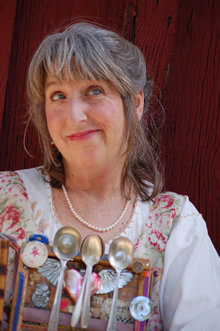
Diane Ferlate: Many Stories but One World
We were in California. She was in Oakland and I was in San Diego. We met at the storytelling festivals as we came up in the American storytelling movement together. She often began her stories with a song, "I'm So Glad I'm Here." Diane Ferlatte just crossed over from this life into the great storytelling beyond, but she is still here for us to know and enjoy. And I'm so glad.
Thank you, Diane, for your great stories, heart, and spirit! You are still here for us to hear:
Wednesday, July 8, 2026
Dylan and the Sea
Once.
In the north lands,
Where in Winter the day masquerades as night and in Summer the night masquerades as day,
The coy alluring sea recedes in seasonal tides, unveiling her wide wet margins to the land.
Inlets and outcroppings
Groves of tangleweed and pristine pools teeming with life
Fleshy anemones, sea stars, rock-clinging mollusks, sand darters, jellies and crabs moving in and out of the lucent green sea lettuce, sea grass, purple dillisk, kelp and carageen.
When the tide is slack, Dylan comes in his gumboots with his bucket and his shears in his practiced hand, cutting the kelp stipe above the holdfast, trimming the sea greens above the bud, so the shore is trimmed but not stripped.
Dylan spent his boyhood at sea, in the company of his father and boat men, coming and going from the land in the darkness and marine mist, so that first and last light were over the open ocean. His first legs were sea legs. He knew the swells and the changing currents. More than once he knew the terror of a deep trough when the water walled out the sky and the sea wanted to swallow him. More than once he knew elation when the wind whipped the wave crests into white mare’s manes galloping on the surf.
Once he saw the Sámi men in their low, sleek, hide-bound boats, darting swiftly in and out the troughs. The ‘Fin Folk’ his father called them.
“Stay clear of them, lad,” his father said, “they’ll ruin your catch.”
His father hated the sea. Hated that he needed the sea. Hated that the sea was so moody and that he had no choice but to take whatever mood she gave him. Hated that he could not live without the sea but that the sea could easily live without him.
“We cannot fathom the darkness below us,” he said, “but the dark fathoms us. So treat the water with respect, boy. But pray to Christopher to guide you safe back to land.”
Dylan’s mother was a fisherman’s wife. On good days she carried her 4 stone creel to market for coin, a bit of bread, and sometimes apples. On a bad day she sat staring out at sea in silence. One day, she was gone.
After that, Dylan carried his mother’s creel, and took to the margin of the sea, in sight of land, harvesting the sea groves.
His father’s dying request was to be buried inland, far from sight of the sea, in some farmer’s field, where the water had no salt, in the ‘dust from which we were made.’ And so it was.
One midsummer, in the long light, when the scandalous sea revealed her widest margin, Dylan came down to harvest.
That day, out in the wet sands, he saw a pair of slender footprints, coming from nowhere, going nowhere. In a nearby pool, he found, among the honeymare, strange weeds. But he knew them at once. ‘These are selkie weeds,’ he thought, ‘and these are her prints.’ He knew about the selkie people. How they would peel off their sealskins and take to land at a whim, to dance and play as though they were human. He knew, also, that they could not return to sea, return to their seal forms, without their skins.
So he took it where he found it and hid it with the honeymare.
And when he hung the seaweeds to dry, he tucked the selkie weeds into a barrel bottom, beneath the dried dillisk.
Then he lit a fire and lit his pipe and sat upon his 3-legged stool and waited.
‘Let’s she if she comes calling,’ he said to himself.
And in the long light of midsummer night, when the tide was at the flood, she came.
She stood at his door, wrapped in seaweed stipe, fronds and fans.
“Look what the sea cast up,” he said.
She dropped the wet weeds before him and he saw her naked dripping form.
“And what am I to call you?” He asked.
“Alaria,” she said.
“That’ll do,” said he. “And I’ll be Dylan.”
“You are welcome here,” he said. “I have gifts for you.”
So she stepped into the half-light of his hearth.
But he did not give her back her skin. Instead, he gave her something else, something he thought she wanted.
He clothed her and fed her, and shared with her his bed.
He kept her skin hidden in his harvest and kept her in his service,
gathering weed from the shore, and caring for his half-dark hearth.
He thought he loved her, but in truth, he loved having her.
In time, her womb began to swell with a coming child.
On the stormy night her babe was born, the midwife came.
When the midwife saw her, she said “You’ve done this before. Where are your children?”
She moaned “In the sea.”
“Ah,” said the midwife, misunderstanding, “it’s too common, the tragedy of drowning.”
So a boy was born to Alaria and Dylan. In the way all men are born,
From broken waters with a coil of flesh wrapped round him.
The midwife knotted the cord to hold it fast, and with her sharp shears and practiced hands she cut the cord above the knot and gave the boy to his mother’s arms.
And they called him Finn.
And in the long days and nights that followed they raised their child.
In the gloaming Alaria told Finn stories as Dylan sat by the hearth, mending nets and sharpening shears.
She told of Dame Ragnell who became ugly and uglier until she gained her sovereignty.
She told of Narcissus, who did not know himself.
One night she told of an ogre who kept a maid in thrall in a ruined castle by a stormy sea, until…
A young prince, the youngest son of seven, set out to seek his fortune.
He came to the ruined castle by the craggy coast where he found the captive maiden.
Together they learned the ogre’s secret: he had no heart in his body.
So it was that the ogre could be strong and deathless.
The heart, they learned, was hidden far away and deep.
So the prince set out. For a year and a day
Until he came to the great lake,
in the center of the lake he came to an island,
on that island he found a church
in that church a well and in that well a duck and in that duck an egg and in that egg, the hidden heart.
Returning with the heart in hand, the prince confronted the ogre and challenged his power.
The ogre pleaded for his heart.
But the prince crushed it and the ogre fell dead.
So it was that maid could not be free until the ogre’s heart was broken.
So it is with many women, said the selkie wife, kept by heartless men.
So it was with my own mother and my mother before her and so it is, she said, staring fixedly at Dylan, with me too.
For the first time Dylan saw her pain and anger.
“I am not heartless,” he said.
He went to the barrel of dillisk weed hiding her skin.
Returning with it he said “Tell me, if I had given you your skin that night, would you have stayed?”
She answered, “we’ll never know.”
“I have seen the mountain hare in winter change her coat to white to hide in snow.
Is that why you change your skin? Your hide? To hide?
Are you here hiding or going to hide?
I have a heart.
It is filled with you and our child and does not want you gone but will no longer make you stay.
Take your changing skin.
Choose what you will do with it.
But tell me if you can,
How can I change my skin?”
What justice is it that you come and go freely from the sea while I am bound to earth?
He followed her to the water’s edge.
Turning, she said
“You do not know who you are, or where you are from.
You tell yourself you were fashioned of ash and dust,
Clay shaped by a craftsman.
Your story binds you to the land.
But change your story and you may find your changing skin.”
She slipped into her skin, into the sea, and was gone.
In the years that followed, Dylan taught their son to love the sea.
And in the long dark of Midwinter days, they sat beside the hearth telling stories
of sea and land
of woman and man
and the unfathomable depths of the heart.
Always he left his door open, to listen to the sea.
In early 2018, by using confocal laser endomicroscopy, a team of researchers identified a new human organ they call the interstitium. The interstitium is a watery fluid-filled contiguum, between the outer skin and the bodily organs, enveloping the body like a liquid second skin.
Martin Waugh’s creative uses of high-speed photography make it possible to capture the smooth and
effortless curves of liquid. By varying the size, speed and position of drops, as well as the color,
viscosity, and surface tension, Martin creates a panorama of color, movement and intrigue. Martin
received his B.S. degree in Physics from Lewis and Clark College in Oregon. His work can be found in
museum, corporate, and private art collections. He lives in Portland. Visit www.liquidsculpture.com to
learn more.
Wednesday, June 17, 2026
WINDOW
My favorite subject in school was the window
–––
There was once a pillow on a bed beside a window.
Every night a head would come into the room and sleep in the pillow's lap.
Every morning, the head would wake and leave.
The pillow remained.
Day in and day out.
The pillow would glance about the room and look outside the window.
The pillow would see the day brighten and darken; the nights pass; the seasons change.
The pillow would watch the trees greening and the clouds gathering;
the lightening flash, the storms breaking and the rain pattering against the glass.
The pillow would see the clear night sky and the bright stars drifting.
As the head slept in the pillow's lap, the pillow began to wonder,
"Is this all I am meant for? Lying about in bed all day watching the world outside?"
The pillow began to feel something stirring inside.
One spring morning, before the head left the room, it opened the window.
Into the room a spry spring breeze came sniffing and exploring.
The pillow felt the cool air ruffle across the bed.
Then, as the pillow watched, a large black bird alighted on the window sill.
The bird tipped its head to one side and another and then,
to the pillow's surprise,
it hopped onto the foot of the bed.
The pillow watched anxiously as the bird hopped closer...
closer...
closer...
It gave a sharp sudden peck at the pillow's case!
The bird buried its beak into the pillow and pulled out a thick tuft
of feathers.
Then it flew away out the window.
"That's odd," thought the pillow, "I did not know I had that in me."
The bird returned
pecked again
and again removed a tuft of feathers.
Other birds came and did the same as the tear in the pillow widened.
The spring breeze played with loose feathers, spinning them out the window.
"At last!" thought the pillow. "I have found that within me which belongs to the world."
Soon all of the pillow's feathers were released and carried off on the wind or out by the birds.
They feathered the spring nests for the birds and flew about among the trees' branches.
They tickled the ears of deer in the fields and the noses of children on swings.
They alighted on glittering streams and sailed off towards the rivers and the sea.
"Now I know who I am. I have gone out the window and joined with the world."
The pillow was happy.
–––
The head, meanwhile, discovering the torn and empty pillow case,
replaced it with a hypoallergenic pillow
and enjoyed the best night's sleep it had ever known.
–––
For Gwenda
Tuesday, June 16, 2026
I STILL IMAGINE STORIES...
News and memories demand my attention. Worries crowd in among plans. Hopes and fears, whine constantly.
But I imagine stories.
No one else hears them, but they stir and evolve constantly.
The boy, Ivan, learns the language of the birds, conversing daily with the flicker, the wren, the mocker, and all the inhabitants of the enchanted forest...
A king gets lost in the woods, and offers riches for a way out...
Water-bugs twirl in frenzied busyness in the creek beneath the willow; rushing about in a miniature water world. In the reeds, the old bug sits and conjures stories for the less restless ones...
The rubber bands in the kitchen 'junk' drawer call out when I go looking for a bit of string, or wire, or tape or fasteners; 'pick me!' they cry...
They accompany me as I go about my busyness.
Entering the dense bamboo behind the house to clear brush, the story speaks:
Destiny waits there.
She entered and met her fate:
sharp, hard, cruel.
Pricked and injured, all she was before fell
fast asleep.
All around her fierce tangles spread:
sharp, hard, cruel.
Thorny briar rose,
Daring princes to come find her..."
I imagine stories. They glow like embers from a dying fire.
My friend, the artist Nate Barton, writes about carrying embers. "There are things in life that do not arrive fully formed. They begin small. A question. A way of noticing. A pull toward something not yet understood. They do not demand attention, but they ask for it. And if they are ignored too long, they can go out."
Stories ask for my attention. I give them my imagination.
They fill a reservoir behind my silence.
I am only an occasional writer as this blog attests.
My mode is speaking. I speak when someone listens.
Now, I am only an occasional speaker.
But I still imagine stories...
Carrying the Ember – Nate Barton
Friday, December 19, 2025
Deliver Kindness
I work part time as an Assistant Rural Carrier for the Postal Service; I’m an “A.R.C.”
The position was created when Amazon contracted with USPS for Sunday deliveries.
I'm low on the pecking order; I only carry packages and parcels and never touch the mail.
It’s mostly on Sundays, but when volume is high – as it is this time of yer - I help the other carriers on weekdays.
It's good to be of service to my fellow carriers and of course to our customers.
I feel like the fairy tale hero, Boots, the Seventh Son of the king. His inheritance is hand-me-downs such as the big clumping boots for which he is named. His brothers have gone off to seek their fortunes and, as is common in such fairy tales, they have all gone astray. So Boots goes off too, on his old horse. He goes he knows not where, to seek he knows not what.
I go off too, on all the rural routes; among apartment buildings, to hilltop mansions, through planned suburbs, trailer parks and cabins hidden in the deep woods.
I like bringing people things. I brought a changing table for a newborn to a family in a double-wide. The young man greeted me excitedly – “Just in time! We just came back from the hospital.”
“Congratulations!” I said, “I’m glad I could get it to you in time.”
The warmth of that exchange was with me all day.
Boots goes with kindness: He gives a crust of bread to the ants; helps a fallen nestling back to its nest; slips a silver trout back into the stream, and so on. Small acts of kindness for him but great for the receivers.
In addition to delivering, I sometimes am the receiver. During last December’s arctic blast, while working past dark, I delivered a package across the road. When I returned, the neighbor gave me a package of alpaca wool socks. My feet walk in gratitude.
Boots comes across a starving wolf who begs to eat his horse. Boots dismounts, the wolf eats, then takes the horse’s place. The wolf thereafter carries Boots to his destiny.
I don’t have a magical wolf but I do have an L.L.V. - a Long Life Vehicle - a heavy metal box on wheels. But it is magic. When I drive that truck people wave and smile; they're happy to see the mailman. Drivers even tolerate my slow pace.
Boots' comes to a ruined castle in a land devastated by an invincible ogre. The ogre keeps a princess captive in his castle. Boots and the orincess tease out the secret of the ogre’s strength: His heart is hidden far away where he cannot be hurt.
Driving the area this past year, that fairy tale is all around - the land is devastated as if attacked by a heartless ogre. Fallen trees, tangled wires, piles of debris, smashed cars and broken homes.
With all that trauma came a weariness and a wariness.
Boots jumps on his wolf and heads off for a year and a day to find the ogre’s heart: to the great lake and the island in the lake and the chapel on the island and the well in the chapel and the duck in the well and the egg in the duck and the heart in the egg.
I drive off the highway onto an asphalt road along a gravel way up a ribbed and rutted dirt road for the last delivery of the day – and the signs appear:
“private road”
“no trespassing”
“I can't afford enough ammo for a warning shot”
I come to a cabin, and there is the last sign:
“either you're bulletproof or you're stupid”
I’m not bulletproof but I am stupid. I park near the porch and get their big box, tipping it to get my knees underneath. When I turn around there is a mountain Meema in her house dress, leaning on her walker with a big smile.
“Hello,” I said, “where can I put this?”
“Inside the door would be nice”
I climbed the steps and knelt to set it down. A burly young man grabbed it and took it inside.
“We needed that mini-fridge, thanks for bringing it all this way up here.”
“How are y’all holding up?”
“Lost our shed, but kept the house - got our well and generator. Neighbors helped.”
We chatted awhile, then parted with the mountain ritual
“Be safe now have a good’n”
“Thanks! Have a good’n”
I was still smiling as I drove away. I realized ‘I've just passed a kind of test.’ I braved the gargoyles of the cathedral and stood for a moment in the holy sanctuary of fellowship.
In most versions of the fairy tale, Boots crushes the ogre’s heart and destroys him. But I'm a delivery man and the way I see it, Boots delivers that heart back to the ogre, who then becomes a mere man, full of compassion and bent with remorse.
Whatever problems we have with fairy tales - patriarchy, heteronormativity, or just plain goofiness – they show an important pattern: the hero offers service. Harvest the overladen tree, milk the swollen cow, comb the thorny nettles out – break bread with the stranger.
Boots’ story remind me: the path to the recovery of the hidden heart is paved with acts of kindness.
I have a delivery for you. I hope it gets to you in time. Take care. Have a good one.
Monday, July 28, 2025
Of Gwenda
“Peter!”
Then Peter knew that there was not a moment to lose. “Come,” he cried imperiously, and soared out at once into the night, followed by John and Michael and Wendy.
–– J.M. Barrie, Peter Pan
Once upon a time, in the open palm of a plum tree, behind the house, beside the graves, a young girl sat with open book, staring through word windows into realms of wonder.
Her name was Gwenda. She grew up, as she knew she must. For she knew “all children, except one, grow up.” She became woman, wife, mother, and grandmother. She may have closed those windows briefly for more pressing matters, but she opened and peered through them again. Then, to the betterment of the waking world, she shared what she saw. For Gwenda had the second sight of a storyteller. She saw stories in ways no others do. She shared those stories in ways no others had. We listened and learned to see anew the storied realms she came to know so well. Like Wendy Darling, she told stories to us lost children and adults.
Then one day she began to tell the stories she saw through the windows before her desk:
Moon, full to bursting, caught in the dogwood tree, makes a path on dark water, pointing back at itself.
One light in a window across the lake, someone else is awake.
—–
The sky! On fire! Inflamed by that great star that holy writ and scientists say will do us in but now, fills the canvas of early morning with magenta, scarlet , orange and yellow.
—--
Robin calls: chirrup, chirrdown chirrup chirrdown
on and on without stopping
Yesterday the Carbon Monoxide alarm went off beep...beep...beep... beep
on and on without stopping
One says wake up it's a beautiful day
the other: Value your life. Yes.
—--
I looked at the leaf of a silver bell tree. Half as big as my little fingernail. And that leaf contains...oh, yes, an epidermis that defends, shields, and protects from bacteria, insects and all other pests. And in the leaf's kitchen are the palisade mesophyll that deal with gas and that's fitting. The veins contain vessels...tiny boats... that tote food, water, and minerals. (Sounds a lot like our innards. We have what heals as well as harms inside.) I'm not fooling, all of this is really going on in every leaf appearing this spring. Seems like you could hear it. We should have a full symphony orchestra playing the Hallelujah Chorus just for the trees.
—--
The wood warblers are back. I heard
one singing zoo zee zeezeezee. The same
repeatable line like the Robin's chirrup over and over
coming from the tops of the white pine tree.
This one in my pine tree is a black throated green.
–––
She spoke to us from ordinary windows and revealed a world of wonder. Her voice, sonorous and sweet, became a daily missive in written words. We, who once listened with eager ears, then listened with open eyes.
She enriched our hearts, our minds, our world.
Then the stars blew the window open… “Come,” she cried imperiously, and soared out at once into the night…
And we will come. In time. She showed us the way:
Second star on the right and straight on until morning.
Friday, May 23, 2025
THE MATRICULATION OF GWENDA LEDBETTER
"I think LedBetter is a wonderful storyteller. It is no wonder that she is so celebrated in Asheville and across the state. She has a tremendous speaking voice, a fabulous turn-of-phrase, great humor and acting skills." - Meg Hale, Daily Planet, September, 12, 2006
Audiences were invited to offer reviews as well. Here is a representative sampling:
"Last night I was privileged to witness Gwenda Ledbetter re-create her life in her one woman show, "Friday's Father". Her performance was utterly luminous and incredibly transporting. It attained a level of expression surpassing mere acting.
"Time and the aging process have not been physically kind to Gwenda and John, her husband. Yet, last night, Gwenda LedBetter transcended all that "old" stuff with an elegant, soaring portrayal of her life and times that left this old man in tears--tears of joy and sadness."
Tuesday, January 7, 2025
Walking with Angela
Last night I learned of the death of Angela Lloyd.
For my first appearance at the Flying Leap Storytelling Festival in Solvang, CA, in 1992, I wrote the story, Sterling. Solvang is a small mountain town north of Santa Barabara. Noted for it's Danish heritage and Danish-style buildings, it is a sort of theme park without rides. There is a small, impressive museum dedicated to Hans Christian Andersen. Sterling concerns a salt shaker who falls in love with the sugar bowl - it is my homage to H.C. Andersen.
Featured at the festival that year was my friend and colleague, Angela Lloyd. A whimsical and eclectic storyteller, with her beribboned 'sunbrella' washboard and kazoo, Angela was charming in the true sense of the word: a magical singing storyteller. I delighted in her company onstage and off. We had worked together with Milbre Burch as the ensemble "Triple Crown Tellers" and often crossed paths at storytelling festival stages in those days. A story of hers tells of the magical pedlar who strings up a clothesline where people can hang up their worries and cares. The pedlar invites them to exchange their troubles for someone else's. As Angela tells the story, with the enchanted ringing of her rainbow bells, our own troubles drift away. She was a true docent of the story realm.
After the festival, the two of us stopped by Nojoqui Falls Park. It was a pleasant sunny day and the park was alive with visiting families. As we approached the falls we delighted at the scenery, the sun, the sounds and sight of children playing. It was a picture-perfect day. But since neither of us had a camera, we decided to capture the scene by improvising poems together.
"Bill-capped boys sparkle the splash water –"
"Rolling musically over stones and trilling sweetly in the rills..."
"Sun-speckled tree cover patchworks of green and oak..."
And so on.
The exact words of our impromptu poetry are lost (though some may yet be found in one of my journals from the era) but the feel and vision of that gentle stroll remains with me, clear and bright. It is not an ecstatic memory, not a moment of high drama or hilarity, but merely a time of simple beauty wrapped in poesy in the company of a fellow story traveler.
Angela was the magic pedlar. She brought us to a place
of easy happiness and profound joy. I am grateful to have walked beside
her.
What rice was for Sterling, the memory of Angela is for me, and all who knew her: a desiccant against despair.
Wednesday, May 3, 2023
Cryptobiosis
Recently shared a story at Story Parlor in Asheville for Tom Chalmer's series, 'Listen To This.' His prompt was like rain in the desert. Here's what I said:
Here's what I had written:
Memory waits in the soil beneath out feet.
The year was 7 B.C. (Before Children) and we headed out on a road trip across the southwest. From St. Louis, across Kansas and the mind-numbingly flat plains of eastern Colorado, over the stunning peaks and nerve-wracking switch-backs of the rockies and down into the great American desert. We were heading for Mesa Verde, the ancient remains of a once thriving cliff-dwelling city of ancestral Puebloans. The name belies the history, for once the land was verdant, but little green remains.
As it happened, Mesa Verde was closed.
So we learned of another, lesser known, ruin in the desert, Hovenweep. The name is Paiute meaning “deserted place.” We set off on a dirt road into the desert of southwest Colorado, across the border of Utah, through an arid land pock-marked with stoney outcrops and clumps of pinyon pine and juniper. Dusty bunches of sagebrush scattered across the open flats, here and there the soil was blackened in charred, burn patches, and the sun burnished over all. As is often the case with arroyos and desert canyons, you do not see them until you are just approaching their edge. Chasms open suddenly before you, great cracks in the tortured landscape. One such canyon was Hovenweep. A National Monument established in 1923 and currently celebrating its centennial, but at the time, little known and little visited.
Trafficked by humans for over 10,000 years, settled about 1,000 years ago with stone and brick buildings carefully crafted onto the landscape and tucked into cliff faces, home to several thousand people who farmed, traded, crafted, played, and studied the brilliant stars from a high stone and brick tower that commanded one end of the canyon. Now it was ghostly quiet with rippling heat rising from the expectant soil. We learned the charred patches were actually a fragile, Cryptobiotic soil, filled with cyanobacteria, lichen, fungi, mosses, and a vast microbiome forming a brittle crust over the deeper earth; quiescent and desiccated, but ready to swiftly reconstitute in the presence of water.
We walked along a narrow dirt path from the canyon rim down into the arroyo where a fresh stream once flowed and many voices once echoed off the canyon walls. Here and there were shallow divots carved into the bare rock offering secure footing as we descended. Steps carved for ancient travelers we now used. The only sound was the scuffling of our hiking boots on crumbling sand and stones and an occasional “watch your step.” “Give me your hand.” “Look at that.” “Some place, huh?”
We tried to stay on a path along the base of the cliff in what little shade we could find as the sun bore down from high noon. We squinted in the light bouncing off the sand and stone. Everything had a hot golden luster. We came across some brick walls enclosing a depression into the canyon wall, a nice cool room out of the heat. We snacked and watered ourselves and took in the close comfort of this little shelter. As we sat there, the light shifted and the bright sunlight dimmed. A wind picked up and we peered out to see the sky blackening. The wind whipped up dust devils beyond the the canyon and suddenly thunder broke, lightening flashed and a heavy rain poured down.
We fell back into our dry recess and watched as the rain curtained the doorway. Thunderous booms echoed all around us, water gushed and splashed across the canyon. We cowered together feeling the tremendous force of the storm. After about 30 minutes, the booming moved past, the rain let up, and the storm was gone. Water continued to stream down the canyon walls and along the riverbed. The air was filled with the sound of running water. And then other sounds joined in. There was buzzing as some kind of fly or gnats were suddenly swarming, and bird trills - from a wren that was hopping in and out of the sodden rocks. The air was fresh with that ozone crackle of the storm mixed with the pungent smell of sage. Here and there splotches of color appeared. Tiny yellow and red flowers in rock crevices, Juniper trees glistened, a chipmunk scuttled beneath one, collecting berries. There were little potholes - morteros - holes formed from grinding grain - now filled with water. I bent over one for a drink and saw tiny bugs swimming about - those fairy shrimp they used to sell as “sea monkeys.” I stood in the center of the renewed stream and marveled at the suddenness of the storm and the suddenness of the life it revived. Cryptobiosis, hidden life, was emerging everywhere. The sun returned and brought a sparkle to the entire scene. I remember marveling at the braided ripple pattern in the water streaming past and wondering if that had inspired weavers and potters to replicate the patterns in their crafting.
The canyon echoed with life. I heard a child laughing and felt that the storm had revived the ghosts of the early Puebloans. It turned out to be a small family also visiting the site and hiking along the same trail. But for a moment, I could feel the rich, verdancy of the place, and appreciate the life that was at home in this now-deserted place.
The water flowed past, the sun warmed and then grew hot. Slowly the life receded to its hiding places. I stood there and felt the burning heat return. But I kept standing. Waiting. Expectant. Suffering the drought while hoping for the coming of another rain.
Still today, every rainfall wakens my cryptobiosis and every drought leaves me hoping.
Thursday, February 10, 2022
The Storytelling Actor
Inspired by my recent conversation with Steven James (The Story Blender, 2/11/2022)
I bring back this article from '91. Enjoy.
Storytelling is too vast and varied an art form to be the province of any one tradition or culture. The current profession of storytelling offers a kind of crossroads for many fields of endeavor, each leading into the other through the common ground of the told story. The shaman, the historian, the psychologist, the librarian, the writer, and the raconteur all may find in storytelling the origin of their profes- sions and, perhaps, the apotheosis as well. The stage actor, along with the rest, has a legitimate claim of kinship to the first storyteller; and may also find in storytelling the final fulfillment of his or her art form.
Many theatre artists turned to storytelling in Europe and the United States over the last twenty* years. What has brought them to this crossroads? What do they seek and what do they have to offer? A look at a few recent trends in performance art may offer a means of understanding the place of the actor/theatre artist1 in the vast arena of storytelling.
Theatre and Storytelling are so closely related it is difficult at times to distinguish the one from the other. The soliloquy, the aside, and the direct address of the audience are still prevalent in modern plays and are indistinguishable from traditional storytelling in the West. Other elements less traditional to Western storytelling, such as dance, mask, ensemble and enactment have ties to storytelling traditions elsewhere. The modern actor, therefore, is bound to cross into storytelling at some point in his/her development.
The developmental path of the stage actor often involves explorations in the root forms that make up the modern theatre. Many actors engaged in such a process, are now storytellers. As actors recapitulate the evolution of stage performance, they bring new life to the theatre and become dynamic artists in their own right.
In the field of Embryology, recapitulation theory suggests that “an organism passes through developmental stages resembling various stages in the phylogeny of its group; ontogeny recapitulates phylogeny.”2 The idea, simply, is that the development of the individual recapitulates the evolution of its species. For example, there is a period in the development of the human embryo in which it resembles the aquatic life forms of its ancestors in the primordial sea. The birth of the child may be said to recapitulate the evolution of the species from sea to land. Whether or not this theory still has validity in the life sciences3, it may be useful to describe the way modern actors are recapitulating the history of theatrical art. This recapitulation is leading them into storytelling. In a way, the modern actor is re-evolving into the modern storyteller.
If personal anecdote may serve to tell a collective story, I will offer my own theatrical ontogeny as an example. As a child I studied theatre for children. I received instruction in many theatre skills: voice, movement, improvisation, interpretation, make-up, playwrighting, etc. By the time I went to college I had two major interests: directing and mime. Directing interested me because it was concerned with all aspects of theatre art and was therefore the most general and all-inclusive area of study. Mime, on the other hand, interested me for the opposite reason: it was theatre at its most essential. In mime, everything was concentrated on the actors’ body and the small space it occupies. Here was the beginning of my recapitulation. During the 1970’s I divided my time between these two disciplines. Yet it was mime that lead me to my theatrical origins and set me on the path to storytelling.
The American revival of interest in mime was well under way by the 1970’s, reaching a climax at the 1974 International Mime Festival and Institute at Viterbo College in Lacrosse, WI. There, a new generation of mime artists acknowledged one another, celebrating this essential theatre and, at the same time, evolving away from it. For the rest of the decade, they would expand their mime repertoires to include mask, juggling, circus skills, experiments with voice, and clowning. This period saw the advancement of commedia d’ell arte troupes, juggling ensembles, the arrival of “new vaudevillians”, a proliferation of solo-actor dramatic performances and performance artists.
In the late ‘70’s, as a member of the Theatre Project Company in St. Louis, I was able to experience a synthesis of my many interests. Here, I began to tell stories. In 1980, storytelling came to St. Louis in a big way, with the first St. Louis Storytelling Festival. I brought my early efforts at storytelling along- side more accomplished artists such as Gamble Rogers, Heather Forest, the energetic Jay O’Callahan and the wonderfully eclectic Ken Feit. These storytellers, and many others like them, coming from folk music, education, the ministry and the theatre, were part of a dynamic exchange of energies and ideas in the form of the spoken story. The simplicity of the telling of stories was capable of unifying otherwise disparate disciplines. Entering into this arena, I discovered a kind of crossroads of many traditions.
Yet I continued to work in the theatre, retreating from the crossroads to ply my trade along the well-traveled paths of the modern actor. I went back to school for a graduate degree in a professional training program. Yet now I was convinced that the actor, more than the other artists that comprise the theatre arts family, was at the center of the art. However, the practice of telling stories (though never fully dormant) began to reassert itself in my life and work. I left acting and returned to the crossroads of storytelling.
Such was my ontogeny. Yet it was by no means unique. Many theatre artists were making the same discoveries and the same decisions. With some variation, I have heard my story from scores of other storytellers. All were on the same pilgrimage, though never certain where it would lead. This evolution may be summed up in this sequence:
1. A return to mime, reducing theatre to its essential element: the actor in action. No voice. No word. No character. No story.
2. A reintroduction of theatrical elements at different stages (mask, circus, improvised scenario) bringing back character, object, and narrative.
3. A return to storytelling with the word arising from the speaker, and the evolution is complete.4
This re-evolution was anticipated by one of its progenitors, Etienne Decroux. Decroux developed the foundations of modern mime in Paris beginning in the 1920’s. His students included Jean-Louis Barrault, Jacques LeCoq, and Marcel Marceau. Marceau, more than the others, brought this art form to prominence in America and the world. Yet Decroux was not interested in the kind of pantomime we saw commercialized in America in the ‘60’s and ‘70’s. He wanted a radical stripping down of theatre to its essence: the actor in action. In 1931, he articulated a formula for the rehabilitation of the modern theatre, the first three points of which were:
“1. For a period of thirty years, prohibit all arts other than the actor’s. Substitute for the set of the play the set of the theatre, the backdrop of all imaginable actions.
“2. During the first ten years, eliminate all elevation from the stage such as benches, stairs, terraces, balconies, etc. Actors shall suggest the ideas of “above” and “below,” although one partner may be beside the other. Then allow elevations only on the condition that they create greater challenges for the actor.
“3. During the first twenty years, prohibit all voiced sound. After twenty years, allow unarticulated cries for five years. Finally, during the last five years
allow words contrived by the actor. “ (Italics my own)5
From here he continues to prescribe the return of playwrighting and so on, all the while insisting that the actor be the primary artist. Given the modern evolution of mime-actors into storytellers, Decrouxs’ prescription appears to have come about, much as he had envisioned it.
The arrival of actors in storytelling can be viewed as a sincere effort to rehabilitate their art and their place within it. In an interesting discussion of the new storytellers in France, Veronika Görög-Karady observes that “a large number of them (ie. new storytellers) belong to the generation which began its adventure with oral literature after 1968. For many, the years between 1968 and 1978 are explicitly considered to be the critical years of their development. Clearly, significant breaks with other forms of classical artistic professions occurred during this period.”6 Why this break? What motivated it?
Many actors experience the modern professional theatre as restrictive and oppressive. The theatre is increasingly dominated by the director and the designer; most choices are dictated to actors, rendering them artistically impotent. We have seen many efforts to correct this, all closely related to storytelling: the one-actor play (usually a biographical work in which the actor has had some authorship); performance art (which seems to be moving into storytelling at break-neck speed); and monolog (exemplified by the work of Spaulding Gray, Eric Bogosian, Lily Tomlin, and the like.) What do these forms offer that traditional theatre (in its present state) does not? Again, Görög-Karady: “public narration, even in an institutional context, appears to approach the closest to the ideal of an immediate aesthetic relationship.”7
Storytelling offers actors a chance to establish a meaningful relationship with an audience. Rather than hiding behind the smokescreen of ‘high culture’, the myth of celebrity, and the cult of ego, the actor can come back to the real world as a real person. Yet this real person still has the ability to transform, to rhapsodize and to mesmerize, but in a new and intimate relationship with an audience.
Actor-storytellers sometimes come under criticism for their use of theatrical elements. The word acting is often used pejoratively in reference to the storyteller who has in some way distanced himself from his listeners. There is such a thing as good and bad acting however, just as there is clear and muddled speech; one can successfully tell a story while the other fails. Storytelling is performance. Ideally that performance has elements of intimacy, conversationality, and a degree of participation. The persona of the storyteller is largely determined by that teller’s tradition. (Even tellers who claim no traditional ties have a style influenced by their life-experiences and the culture(s) that shaped them.) To require that the actor-storyteller not be theatrical both a misconceives theatricality and disregards that teller’s tradition.
The crossroads of storytelling may well be the breeding ground for a new dramaturgy. Certainly the actor, recapitulated as the storyteller, has the potential to fuse dramatic energies into powerful storytelling which is immediate and original. What does the audience get out of this? Perhaps it is a chance to experience the theatre they were promised they would find at the playhouse, but which eluded them. Perhaps it is a chance to participate in a new indigenous theatre where the actor is celebrant and the audience is a fellow-traveler. In any event, it certainly is a chance to hear again a good story well told.
1 It is important to keep in mind that actors are artists of a kind: their medium is the theatre, their craft works with human behaviors and languages. I use the term “actor/theatre artist” to emphasize the point that acting is more than rote memorization of prescribed language and tasks.
2 McGraw-Hill Dictionary of Scientific & Technical Terms, 3rd Edition.
3It is pretty much an obsolete theory in the Life Sciences, and actually may have been exploited to support racist and sexist views in the 19th century. How- ever, the idea gives a useful analog for the purposes of this paper. For an interesting discussion of recapitulation theory and its socio-political implications, read The Mismeasure Of Man by Stephen Jay Gould, New York, Norton, 1981.
4 At various stages along this sequence a number of important artists have surfaced: the mime of Marceau, the mask work of Mummenschanz, the clowning of Bill Irwin, “new vaudevillians” and now “spoken-word” artists, and so on.
5 Vincent L. Angotti and Judie L. Herr, “Etienne Decroux and the Advent of Modern Mime,” Theatre Survey, vol. xv, no. 1, May 1974. Translated by Angotti and Herr from Paroles sur le mime (Paris, 1963) by Etienne Decroux.
6 Veronika Görög-Karady, “The New Professional Storyteller In France”, ISFNR Theory Commision Paper (1989). Reprinted in Storytelling in Contemporary Societies, Lutz Röhrich/ Sabine Wienker-Piepho, eds. , Gunter Narr Verlag Tübingen, 1990.
7 Ibid.
David Novak is a storytelling actor who
can be seen and heard on stages across the
country and abroad. For more information
contact https://www.atellingexperience.com/
4
Tuesday, June 9, 2020
The Cultural Pandemic
Somehow, though, I always managed to land on my feet. I acquired a deep and abiding faith that things will always work out. I often felt my mercurial career was some kind of magical journey, a Homeric Odyssey, wherein I am always in the hands of a mysterious, benevolent, force.
Now I know it isn't all magic, and not so mysterious. Whatever good fortune I have enjoyed must now be suspect, as the "invisible hand" that moves through it all, is white. A corollary to the silver spoon, the white hand opens doors, calms rough seas, rescues, uplifts, empowers, and emboldens.
"According to the Oxford English Dictionary, the first appearance in print of the adjective white in reference to “a white man, a person of a race distinguished by a light complexion” was in 1671. Colonial charters and other official documents written in the 1600s and early 1700s rarely refer to European colonists as white." [https://www.facinghistory.org/holocaust-and-human-behavior/chapter-2/inventing-black-and-white ]
Race is a social construct after all, hence "whiteness" is as contrived as "blackness." The GWACC co-opted a large segment of the population while conveniently disenfranchising a newly identified group of "color." Being designated as "white," compounded for men their ages-old prerogatives of gender. "White" women, though still second-class citizens, became club members too, albeit at the bronze rather than silver levels.
The American racial narrative became so atomized as to be atmospheric.(2) As a result, I am inheritor of ill-gotten gains; a ledger of dividends centuries long and written in blood. I inhabit an invisible kingdom made of amnesia and reconstructed stories maintained by a power structure that lacks legitimacy. Whiteness is what Kurt Vonnegut would call a granfalloon, a meaningless group identity as vapid and spurious as Star-bellied Sneetches.
Menakem: … right after the Bacon Rebellion is the first time you start to see in-law “white” persons; not landowners, not merchants, “white” persons *…
Tippett: That language.
Menakem: … at that moment, the white body became the standard of humanity — not merchants, not landowners — the white body, because at that moment, the white body had dominion over, and everything else was a deviant from that.
And then a couple years later is when you start to see white persons show up in Virginia law. By the time they offered that to poor white people, they said, “Ey, you want to be white?” After all of that brutality, white people said, “You mean, all I gotta do is be white, and my babies may not have to go through that? Yeah, I’ll take that. Let’s take that.” And that’s what sewed it in. So now they saw their allegiance more with white landowners than the enslaved Africans that they were rebelling with.
Tippett: You’re also saying that it was actually a way of co-opting poor white people into their further traumatization.
Menakem: That’s exactly right. That’s why what you see now is like the flower of the seed of that. That’s what you’re seeing right now.
My father and his peers returned from the World War with their eyes brutally opened to horrors they had thought impossible in Western Civilization. They were determined that their children would not know such horrors and that the specter of fascism would never rise again. So they raised precocious children in a protective bubble of ignorance and distraction. They showered us with opportunities they never had: toys and food in abundance, higher and higher education, and the confidence to succeed. I sincerely believe they wanted us to be citizens of a renewed yet innocent society.
Some of us, that is.
Walt Disney opened "the happiest place on earth" a month before I was born in 1955. Disneyland embodied a vision of childhood and optimism. Yet for all the racial inequities of the era, at it's core was a deep utopian dream of human happiness. A dream that has slumbered in Western Civilization for thousands of years. For the mythic memory of a Golden Age is ubiquitous, and the loss of that Golden Age was the trauma that birthed "civilization." Western Civilization is predicated on trauma, operating on cycles of abuse and alienation, addicted to consumption and dependent on the oppressive vilification of The Other.
Can we move away from the false narrative of race and color and shift our discourse in meaningful ways? Resmaa Menakem again:
Menakem: Well, I don’t say bodies of “color” anymore, because what I’m trying to do is, I’m trying to reclaim the idea that I’m actually a human.
Tippett: So you’re saying that you’re formed by the culture —
Menakem: Bodies of culture. That’s right.
If we are not to abandon our received identities as "white" persons, might we re-frame that identity? What if we are to respond as the "white blood cells" of our culture, and gather around the pathogens to eliminate them from our system? This is a pandemic after all.
1. The Price of Admission
2. Color Town